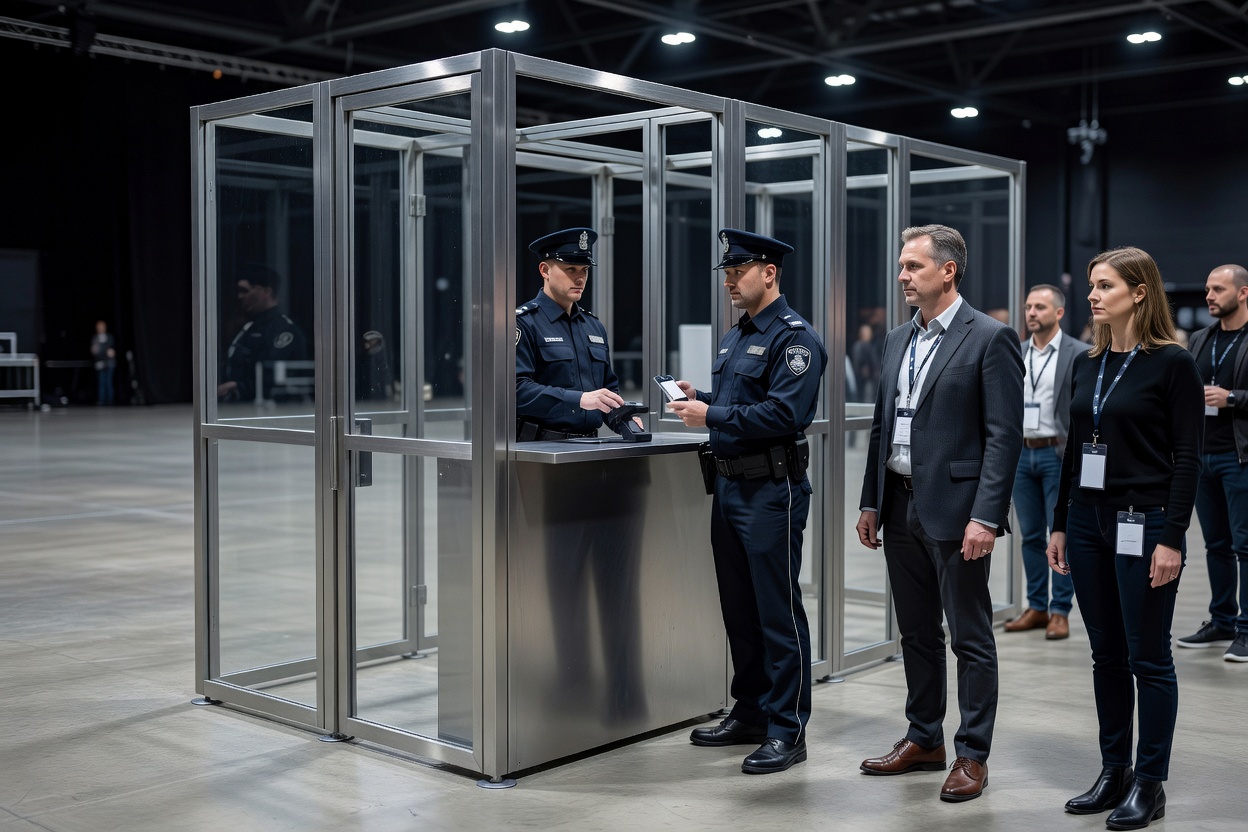
Start with the entry-point plan
List every public entrance, staff entrance, service door and restricted route. Record its purpose, operating hours, expected users and responsible team. This prevents one access point from carrying an unplanned mix of visitors, contractors and staff.
Public entry normally serves ticketed visitors. It needs clear validation, accessible routes and a capacity plan. Staff entry supports employees, officials, contractors and event workers. Service access handles deliveries and operational vehicles. Restricted access protects areas such as control rooms, technical spaces, athlete routes and back-of-house rooms.
System components
- Turnstiles: place them where arrival flow, supervision and emergency release requirements can be assessed together.
- Credential readers: define which credential types are accepted at each point and who can change permissions.
- Doors and gates: document normal state, controlled state, keyholder responsibility and inspection frequency.
- Temporary credentials: set issue, expiry, return and exception procedures for event-day workers.
- Access permissions: use role and zone rules rather than informal assumptions.
Access classes
Public entry
High-volume access with ticket or visitor validation, visible wayfinding and an accessible alternative route.
Staff entry
Credential-led access for personnel, contractors and officials, with induction and shift accountability.
Service access
Controlled movement for deliveries, maintenance and production activity. Coordinate timing and vehicle checks.
Restricted access
Limited to named roles or approved tasks. Review permissions when event conditions change.
Testing and fallback
Test readers, turnstiles, doors, intercoms and reporting before every significant event. Check power, network connectivity and time settings. Test a representative set of credentials without exposing sensitive permission details in public documents.
A manual fallback should be written, briefed and supervised. It may include a controlled paper list, visual credential check, door assignment and incident record. The fallback must preserve safe movement and accountability. It should not become an informal permanent process.
Accessibility and flow
Provide equivalent accessible routes without isolating visitors. Keep routes level where possible, protect clear widths and position assistance where staff can respond without blocking the lane. Separate entry and exit movement when the venue plan requires it.
Good for
New venues, seasonal access reviews, changing credential models, temporary event layouts and sites with mixed public, staff and service movement.
What to know
Access hardware is only one part of control. Permissions, staffing, signage, maintenance and documented exceptions determine whether the plan works on event day.