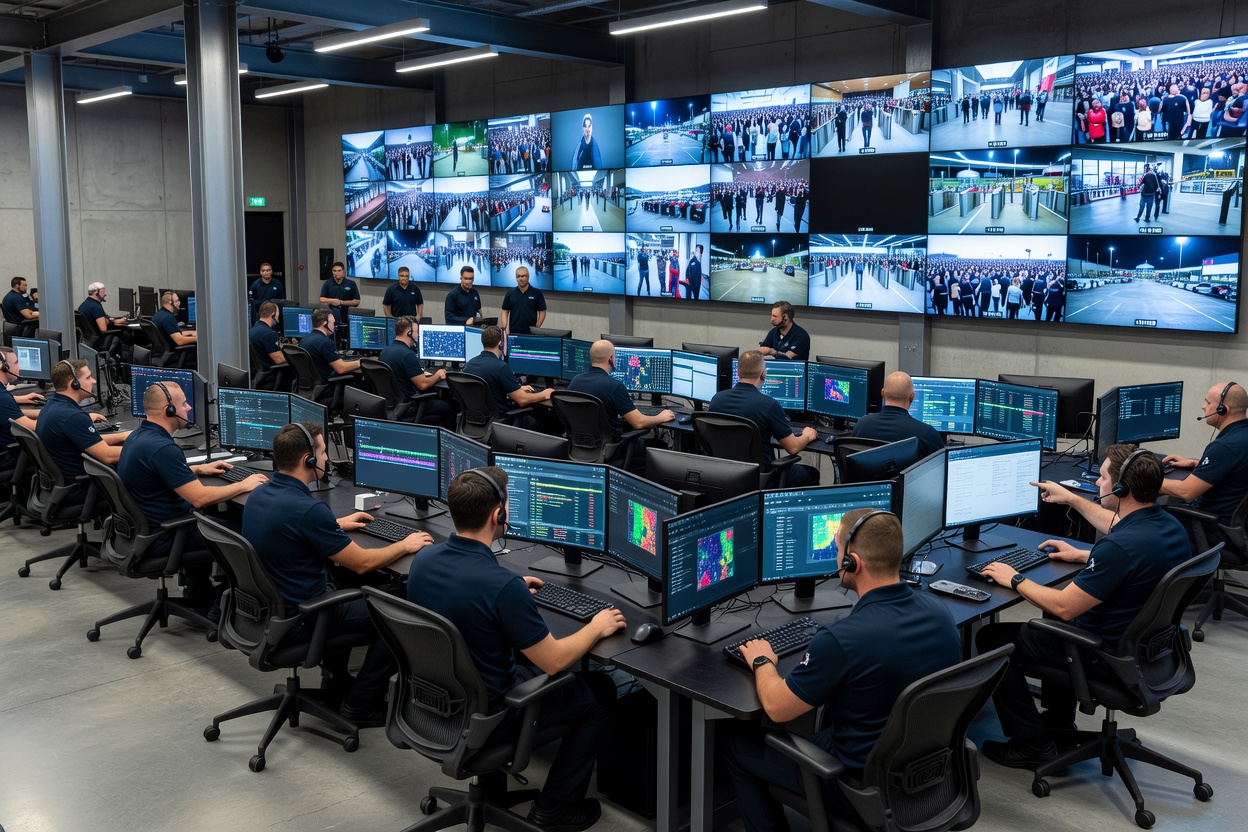
Build the operating picture
Event infrastructure should make responsibility visible. Define where decisions are made, how information reaches the right team and how issues are recorded. A security control room may coordinate access, monitoring, communications and incident reporting, but its authority must be clear before the event.
Use a room plan that identifies work positions, displays, radio charging, power, lighting, visitor control and escalation contacts. Avoid placing critical functions where noise, poor sightlines or competing event activity reduces attention.
Core infrastructure
- Control rooms: establish roles, shift handover, room access and decision ownership.
- Monitoring positions: place observation where entry, circulation and restricted areas can be assessed within the venue plan.
- Communications: define primary and backup channels, call signs or role names, escalation points and radio discipline.
- Checkpoints: provide consistent equipment, staffing, signage and a method for recording exceptions.
- Access logs: set retention, review and access rules before data is generated.
Camera placement considerations
Camera planning should support safe operations, not create a false sense of coverage. Consider entrances, approaches, queue interfaces, service routes, restricted transitions and areas where staff need situational awareness. Account for lighting, weather, obstructions, privacy and monitoring capacity. A view that cannot be observed or acted upon is not a complete control.
Event-day coordination
Use a short briefing that confirms opening times, route changes, credential rules, emergency contacts, public information and reporting expectations. Schedule a handover between setup, live event and close-down teams. Temporary infrastructure should be checked for power, stability, cable protection, weather exposure and removal responsibility.
Incident reporting
Reports should capture time, location, people involved, action taken, escalation and follow-up owner. Keep descriptions factual. Do not record more personal information than the purpose requires. Define who reviews reports and when unresolved issues move into maintenance or management action.
Emergency communication planning
Write plain-language messages for likely operational states. Confirm how public address, staff communication and emergency services liaison interact. Communications should be tested in the locations where staff will use them, including noisy or remote areas.
Good for
Large event programs, venues with multiple operating teams, temporary event builds and sites that need clearer control-room accountability.
What to know
Infrastructure must match staffing and procedures. More equipment does not replace a defined decision path or a tested communication plan.