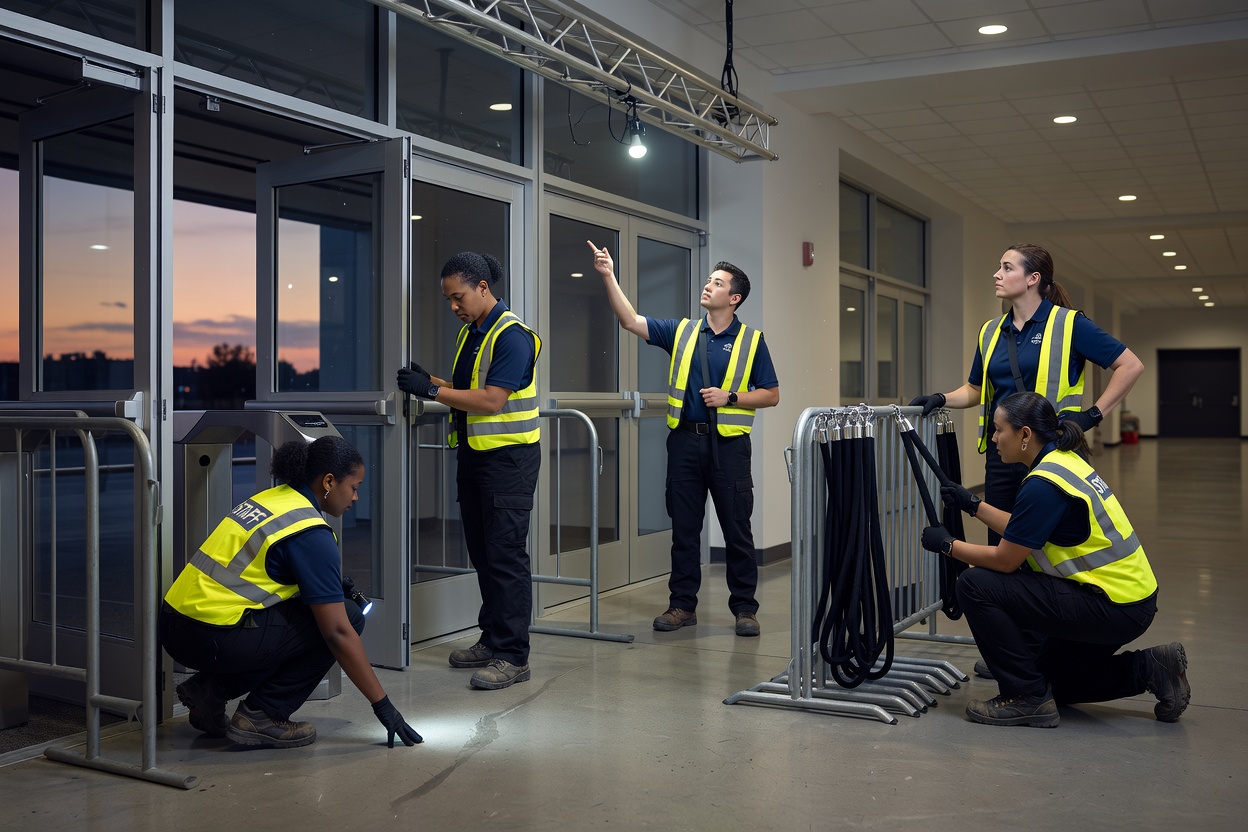
Readiness is a sequence
Readiness is not a single sign-off. It is a structured inspection of access, people, communications, restricted areas, emergency arrangements and the physical venue. Assign each check to a named role and record exceptions with an owner and due point.
Pre-event inspection
Review the latest venue plan, event schedule, staffing list, credential rules and temporary changes. Walk public entry, staff entry, service routes, control rooms, restricted areas and emergency routes. Compare the physical condition with the plan rather than assuming yesterday’s layout remains current.
Access and communications checks
- Test representative credentials at the access points where they are expected to work.
- Confirm doors, gates, turnstiles, intercoms and release procedures are understood by responsible staff.
- Check radio charging, channel allocation, backup communication and contact lists.
- Confirm incident reporting location, format and escalation ownership.
- Verify signage and temporary barriers match the approved movement plan.
Entry-point walkthrough
Walk the route as a visitor, staff member, contractor and person requiring an accessible route. Note decision points, pinch points, poor lighting, conflicting signs and places where staff need a clear view. Correct simple issues before opening and escalate anything that needs a specialist decision.
Restricted-area review
Check that restricted doors, gates and transition points have the intended permissions. Confirm that staff understand who may approve an exception. Review temporary credentials and collect expired or unused items according to the venue process.
Emergency preparation
Confirm the relationship between venue operations, event management, emergency services and public communications. Staff should know how to report a concern, where to assemble information and who can make an operational decision. Procedures must be aligned with local requirements and the venue’s established plans.
Post-event inspection
After close, inspect access points, temporary equipment, restricted areas and service routes. Record damage, missing credentials, system faults, unusual events and actions still open. Separate immediate safety issues from planned maintenance, but do not lose either category.
Concise readiness checklist
Good for
Recurring fixtures, complex event programs, new operating teams, temporary layouts and venues that need consistent handover records.
What to know
Checklists support judgment; they do not replace it. Escalate conditions that fall outside the approved plan.